Five seats that could shape Bihar elections
Key constituencies to watch in Bihar’s 2025 assembly polls
- By Gurmehar --
- Friday, 07 Nov, 2025
As Bihar heads to Phase 1 polling on November 6, 2025, five Assembly seats have gained attention for different reasons. These constituencies are not just about winning votes; they test political strategy, family influence, new faces, and personal loyalty. They are Tarapur, Raghopur, Mahua, Alinagar, and Mokama.
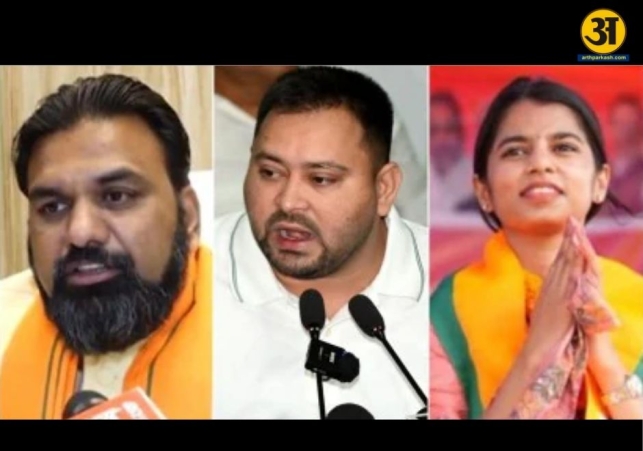
In Tarapur, Deputy Chief Minister Samrat Choudhary is taking a big risk. This seat, in Munger district, was a JD(U) stronghold for a decade, held by Neeta Choudhary in 2010 and Mewa Lal Choudhary in 2015 and 2020. However, now Choudhary is contesting on a BJP ticket, making it a key battleground for the NDA. The constituency has a mix of Kushwaha, Yadav, Muslim, and Scheduled Caste voters, which makes the contest unpredictable.
Election numbers show the seat has seen shrinking victory margins over time. In 2010, JD(U) won by 13,878 votes, which dropped to 7,225 votes in 2020. The RJD’s Divya Prakash secured 32.8 per cent of votes in the last election. With 13 candidates now contesting, including top leaders from NDA and Mahagathbandhan, Tarapur is expected to be very competitive. If Choudhary loses, it would be a major setback for the BJP’s growth in eastern Bihar.
Raghopur is all about the Yadav family dynasty. Tejashwi Yadav is defending his family’s stronghold for the third time. Lalu Prasad Yadav won Raghopur in 1995 and 2000, Rabri Devi represented it three times, and Tejashwi has held it since 2015. His rival Satish Kumar from BJP is contesting again.
Looking at past results, Tejashwi’s vote share has stayed strong, around 48–49 per cent from 2015 to 2020, and he won by 38,174 votes in 2020, the largest margin in the seat’s recent history. But in 2025, with 13 candidates including Chanchal Singh of the Jan Suraaj Party, vote fragmentation could influence the results. Raghopur is a high-stakes battle for both Tejashwi and the BJP, with prestige and political psychology at play.
Family feuds, new faces, and strongmen
Mahua shows how family disputes can change elections. In 2015, Tej Pratap Yadav won with 43.3 per cent of votes. In 2020, he moved to another seat, and Mukesh Kumar Raushan of the RJD won Mahua with only 36.5 per cent and a smaller margin of 13,687 votes. Now, Tej Pratap is back with his own party, the Janshakti Janata Dal, and is fighting against the RJD candidate. The Lok Janshakti Party’s Sanjay Singh is also contesting, making it a three-way fight among Yadav voters. Mahua has 15 candidates, the most among the five key seats, and vote splitting could help the NDA.
Alinagar, in Darbhanga, is seeing a different experiment. The BJP has fielded 29-year-old classical singer Maithili Thakur against RJD veteran Binod Mishra. This seat has seen narrow margins in the past. In 2020, Mishri Lal Yadav won by just 3,101 votes. With 12 candidates contesting and 40 per cent of young voters, Alinagar could swing on small differences, including turnout, caste support, and the candidates’ personal appeal. If Thakur wins, it will validate BJP’s strategy of using youth and celebrity appeal; if she loses, questions will rise about sidelining experienced leaders.
ALSO READ: Why strokes can strike at any age: 8 common myths busted
ALSO READ: Scientists uncover unexpected connection between premature greying and cancer risk
Mokama is about Anant Kumar Singh, a controversial leader who has won four times from four different parties. In 2010, he won as a JD(U) candidate; in 2015, as an independent; and in 2020, he won with a large margin as an RJD candidate. Now he is back with JD(U), contesting against RJD’s Veena Devi. Mokama has only eight candidates, making it largely a two-way fight. Turnout has been steady at 54–57 per cent. This seat will test whether voters support a leader personally or the party he represents.
These five constituencies show the complex nature of Bihar politics. Tarapur tests the deputy CM’s gamble and NDA expansion. Raghopur is about defending family legacy against political challengers. Mahua highlights the impact of family disputes and vote splitting. Alinagar demonstrates the role of new faces and celebrity appeal. Mokama tests personal loyalty versus party identity.
With shrinking margins, higher voter turnout, and multiple candidates in most seats, these contests could influence not just the first phase results but also the broader mood of Bihar’s 2025 elections. Each seat carries lessons in strategy, candidate selection, and voter behavior. The political dynamics in these constituencies will be closely watched by parties and analysts alike, making them the most important battlegrounds in Phase 1.
Related News